

Where to Find Authentic Remote Work Jobs Online
Last Updated • 3 September 2026
Finding legitimate remote work jobs can be challenging, especially when you are just starting your career. A quick search for “remote jobs” can bring up thousands of listings, but not every opportunity is worth your time.
Some listings may be outdated, while others may not clearly explain the company, role, salary, or hiring process. For Gen Z and Millennials entering the workforce, knowing where to look for authentic
remote work from home jobs
can make the job search more efficient and safer.
The good news is that there are several reliable ways to discover remote opportunities. The key is to combine reputable platforms with your own research and verification.
01. Start With Company Career Pages
One of the most reliable ways to find a remote position is to go directly to a company's official website.
Most established companies have a
Careers, Jobs
, or
Work With Us
section where they publish open positions.
Searching directly through company websites has several advantages:
- You know who the employer is
- You can read about the company
- You can explore other available positions
- You can verify the job listing
- You can often apply directly
If you find an interesting position on another website, check whether the same vacancy appears on the company's official careers page.
This extra step can help you verify that the opportunity is genuine.
02. Use Established Job Platforms
General job platforms can be useful when searching for remote positions.
You can search using terms such as:
- Remote software developer
- Remote graphic designer
- Remote UX/UI designer
- Remote content writer
- Remote customer support
- Remote marketing specialist
- Remote project manager
Use filters for location, experience level, job type, and remote work whenever available.
Do not simply apply to every result.
Read the complete job description and research the employer before applying.
03. Explore Remote-Specific Job Boards
Some websites focus specifically on remote employment.
These platforms can make it easier to filter out traditional office-based roles and focus your search on remote opportunities.
Look for platforms that provide:
- Clear job descriptions
- Company information
- Job categories
- Experience levels
- Remote work details
- Application information
Even when using a specialized remote job board, verify the employer before sharing sensitive information.
04. Use LinkedIn for Remote Opportunities
Professional networking platforms can be valuable for finding remote positions.
You can search for specific roles and filter results based on remote work.
For example:
Remote Front-End Developer
is generally more useful than simply searching:
Remote Jobs
You can also follow companies you are interested in and monitor their job postings.
Another advantage is that you can build your professional presence while searching.
Make sure your profile includes:
- Professional headline
- Relevant skills
- Work experience
- Portfolio
- Education
- Professional achievements
Your online profile can become an extension of your resume.
05. Search Through Professional Communities
Online communities can be particularly useful for specialized careers.
Developers, designers, marketers, writers, and other professionals often share job opportunities within industry communities.
These may include:
- Professional forums
- Developer communities
- Design communities
- Industry newsletters
- Online networking groups
- Career-focused communities
Community-based opportunities can sometimes provide access to smaller companies and startups that do not advertise extensively on large job platforms.
However, always verify the employer before applying.
06. Explore Technology-Focused Opportunities
If you are interested in programming, software development, web development, or other technology careers, specialized technology resources can be particularly useful.
CodingProfessors can be explored as a technology-focused platform for people interested in coding, technical careers, and related opportunities.
Specialized resources can be valuable because they allow you to search within a specific professional field rather than competing with every type of job listing.
If you are building a technology career, combine job searching with continuous learning and portfolio development.
07. Use Search Engines Strategically
Search engines can also help you discover remote positions.
Instead of searching only for:
remote jobs
try using specific combinations such as:
remote junior graphic designer jobs
remote entry-level developer jobs
remote content writer jobs
remote UX designer jobs
remote customer support jobs
You can also include the type of company or industry you want to work in.
More specific searches usually produce more relevant results.
08. Look at Startup Opportunities
Startups can be a good source of remote positions.
Early-stage companies often need people across areas such as:
- Development
- Design
- Marketing
- Customer support
- Sales
- Operations
- Content
Working for a startup can also expose you to different responsibilities.
However, research the company carefully before accepting an offer.
Look at:
- Its website
- Leadership team
- Product or service
- Online presence
- Funding or business information where available
- Employee information
- Job responsibilities
A small company is not automatically suspicious, but you should still understand who you are applying to.
09. Use Your Professional Network
Not every remote position is advertised publicly.
Someone in your professional network may know about an opening before it appears on a job board.
Let people know what type of role you are looking for.
You can connect with:
- Former colleagues
- University classmates
- Industry professionals
- Recruiters
- Mentors
- Freelance clients
- Professional communities
Your message does not need to be complicated.
Explain what you do, what type of position you are looking for, and what skills you bring.
Networking is not about asking everyone for a job.
It is about building professional relationships that may lead to opportunities.
10. Check the Job Listing Carefully
Before applying, read the listing from beginning to end.
Look for:
- Company name
- Job title
- Responsibilities
- Required skills
- Experience level
- Compensation information
- Working hours
- Time-zone requirements
- Application process
- Contact information
A legitimate listing should provide enough information for you to understand what the position involves.
If the description is extremely vague, investigate the company before continuing.
11. Research the Employer
Finding a job listing is only the beginning.
Research the company independently.
Check:
- Official website
- Professional profiles
- Company employees
- Product or service
- Online reputation
- Contact information
Search for the company's name along with terms such as:
Reviews
,
Careers
, or
Scam
Do not rely on a single review or comment.
Look for patterns and verify information through multiple sources.
12. Be Careful With “Easy Money” Offers
Some fake remote job listings target people looking for quick income.
Be especially cautious when an opportunity promises:
- Very high income with minimal work
- Guaranteed employment
- No experience for highly paid positions
- Instant hiring
- Large payments for simple tasks
A legitimate remote position can offer flexibility and competitive pay, but the responsibilities and compensation should make sense together.
If an offer seems unusually easy, research it before moving forward.
13. Never Pay to Secure a Job
You should not have to pay money simply to receive employment.
Be cautious if a recruiter asks you to pay for:
- Application processing
- Recruitment
- Guaranteed placement
- Training
- Equipment
- Special access to jobs
A legitimate company may provide equipment or explain what equipment you need, but requests for money should be carefully verified.
Never allow the urgency of a job search to override basic safety checks.
14. Prepare Before You Start Applying
Finding authentic opportunities becomes easier when your application materials are ready.
Before starting your search, prepare:
Resume
Keep an updated resume that highlights your most relevant experience.
Portfolio
Create an online portfolio if your profession benefits from showing previous work.
Keep your professional profile updated.
Work Samples
Have relevant projects available when employers request them.
Professional Email
Use an email address that is appropriate for job applications.
Being prepared means you can apply quickly when you find a good opportunity without submitting a rushed application.
15. Apply Strategically
You do not need to send hundreds of applications every week.
Instead, focus on relevant positions.
Before applying, ask:
Does this role match my skills?
Can I demonstrate the required experience?
Would I actually want this job?
Can I explain why I am a good fit?
A smaller number of well-targeted applications can be more useful than sending the same resume everywhere.
16. Create a Remote Job Search Routine
Consistency can make your job search more manageable.
For example:
Morning:
Search newly posted positions.
Afternoon:
Customize resumes and submit applications.
Evening:
Research companies and prepare for interviews.
You can maintain a simple spreadsheet to track:
- Company
- Position
- Application date
- Job link
- Recruiter
- Interview date
- Status
- Follow-up date
This prevents opportunities from getting lost.
17. Watch for Remote Work Scams
Even reputable platforms can contain suspicious listings.
Common warning signs include:
- Requests for money
- Unusually high salaries
- Pressure to act immediately
- No proper interview
- Unclear job responsibilities
- Suspicious email addresses
- Requests for sensitive information too early
- Payments or checks sent before employment begins
If something feels wrong, stop and verify the opportunity independently.
You can also review our guide on identifying fake remote job listings:
/blog/how-to-spot-fake-remote-job-listings
18. Think Beyond “Hiring Immediately”
If you search only for remote jobs hiring immediately, you may overlook excellent long-term opportunities.
Immediate hiring can be useful when you need work quickly, but your career should not be based entirely on speed.
Consider positions that offer:
- Skill development
- Career progression
- Mentorship
- Competitive compensation
- Stable employment
- Interesting projects
- A healthy work environment
The best remote opportunity is not always the fastest one to respond.
Where Should You Start?
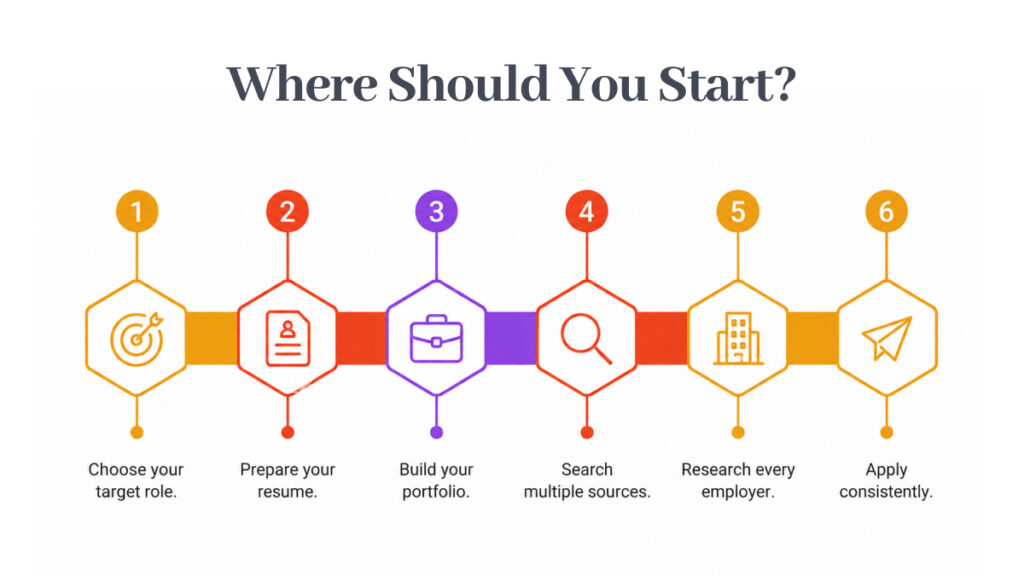
If you are a Gen Z or Millennial job seeker entering the remote workforce, start with a simple system:
1. Choose your target role.
Know what position you want.
2. Prepare your resume.
Make sure your experience matches the role.
3. Build your portfolio.
Show evidence of your skills.
4. Search multiple sources.
Use company websites, job platforms, professional communities, and specialized resources.
5. Research every employer.
Verify the company before sharing sensitive information.
6. Apply consistently.
Focus on relevant opportunities rather than applying randomly.
Final Thoughts
Finding authentic remote work jobs requires more than typing “work from home” into a search engine.
The best approach combines reliable job sources, targeted searches, professional preparation, and careful research.
Start with companies you know. Explore established job platforms. Use professional networks. Check specialized resources such as CodingProfessors if you are interested in technology careers.
Most importantly, do not let the desire for a remote job make you ignore warning signs.
Prepare your resume and portfolio before you begin searching. Research employers before interviews. Verify job listings before sharing sensitive information.
With the right strategy, finding remote work from home jobs can become less overwhelming and more focused.
Your next opportunity may be online.
Make sure you are ready to find it.

About the Author
Abdul Rehman — Co-Founder & Technical Director, Coding Professors
Abdul Rehman is a web designer and engineer with 3+ years of experience in high-end web design and development. As Co-Founder of Coding Professors, he focuses on making technology careers more accessible through practical guidance, mentorship, and industry-focused resources.