
Hostinger Al Builder Review: We Built an E-commerce Website with Al
Last Updated • 21 October 2026
Can Hostinger Al Builder turn a detailed prompt into a usable online store? To find out, I tested it by creating a fragrance e-commerce website and exploring its design, product pages, shopping cart, mobile layout, and publishing workflow.
In this edition of Al Developer Lab by Coding Professors, I used Hostinger Al Builder's agentic mode on the free plan to see how well it handled a real website-building task. Here's what I tested, what impressed me, and where the experience could improve.
What Is Hostinger Al Builder?
Hostinger Al Builder is an Al-powered website and app creation platform. It lets users describe a project in natural language and uses Al to generate a starting point that can be refined.
Rather than manually creating every page and component, you can begin with a prompt and ask the Al to build or adjust the website. Hostinger also provides editing and publishing tools within its platform.
For this experiment, I wanted to test more than a simple landing page. I chose an e-commerce website to see how the Al handled product presentation and shopping-related interactions.
What I Built: A Fragrance Online Store
I gave Hostinger Al Builder a detailed prompt for a fragrance store. The requirements included a homepage, product pages, e-commerce functionality, responsive layouts, and technical requirements for the project.
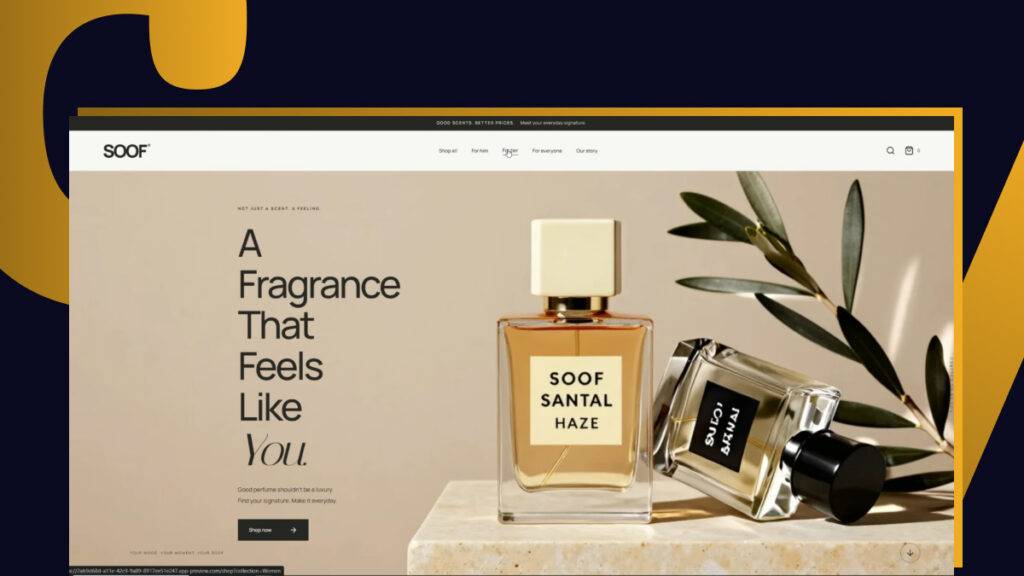
The Al generated a website with fragrance imagery, product presentation sections, navigation, and shopping-related components. The result included 38 sections, along with store integration and data-storage functionality in the generated project.
The detailed output was promising, although the generation process took a considerable amount of time. This is worth considering if you expect a complex website to be ready almost instantly.
What I Tested
1. Al-Generated Design and Product Images
The website included Al-generated perfume imagery with a consistent visual direction. The homepage had a clear structure, and the product presentation helped the store feel more complete than a basic template.
I also explored the hover effects and interactive elements. These details helped make the interface feel more polished.
However, good visuals are only one part of an online store. The underlying shopping functionality needs to be tested separately.
2. Search and Product Pages
I explored the search page and opened a product page to see how the website organized its products.
These pages helped demonstrate how the generated website could support a shopping journey, from discovering an item to viewing its details.
The experience looked promising, but a real store would still need careful checks for product data, search accuracy, inventory, and other business requirements.
3. Add to Cart and Cart Persistence
One of the most important parts of my test was the shopping cart.
I selected a 50ml fragrance product and added it to the cart. I then performed a hard refresh to check whether the cart contents remained available afterward.
The cart persisted after the refresh, which was a positive result in my hands-on test. It showed that the generated shopping experience went beyond a purely static product display.
However, this single test does not verify every checkout scenario, payment method, order workflow, or inventory operation. Those would need additional testing before launching a commercial store.
4. Mobile Responsiveness
I previewed the website in an iPhone 16 layout to check how the design adapted to a smaller screen.
The mobile preview allowed me to inspect the layout and product presentation on a phone-sized viewport. This is important because customers may discover and purchase products from mobile devices.
Still, previewing a mobile layout is not the same as testing across real devices and browsers. A production website should receive further responsive and usability checks.
5. Promotional Offer and Store Elements
The generated website also included a popup offer banner, adding another common e-commerce element to the experience.
Together with the product pages, search, hover effects, and cart, this gave me several areas to explore beyond the homepage.
The overall result was detailed, but the more complex the website becomes, the more important it is to verify each interaction instead of assuming every generated feature works correctly.
Hostinger Al Builder: Free Plan and Publishing
I conducted the test using the free plan, which allowed me to explore the Al website-generation workflow.
However, publishing the project required a Hostinger plan in my test. That distinction matters: being able to generate and preview a website does not necessarily mean you can launch it publicly without paying.
Hostinger's current Al Builder plans include hosting and domain options, with available features depending on the plan. Check the
official Hostinger Al Builder page
for current pricing and publishing details before choosing a plan.
Pros and Limitations
What I liked
- Generated a detailed fragrance e-commerce website from a prompt.
- Produced consistent Al-generated product imagery.
- Included product pages and a search page.
- The 50ml add-to-cart test worked, and the cart persisted after a hard refresh.
- Offered a mobile preview for checking responsive layouts.
- Included additional store elements, such as a promotional popup.
What could be better
- Generating the website took a long time.
- The interface and workflow felt somewhat complicated to navigate.
- The free plan allowed testing, but publishing required a paid Hostinger plan in my test.
- More extensive testing would be needed to validate checkout, payments, inventory, and the complete order process.
Final Verdict: Is Hostinger Al Builder Worth Trying?
My test showed that Hostinger Al Builder can generate a detailed e-commerce website from a carefully written prompt. I was able to explore the fragrance store's design, product and search pages, hover effects, promotional popup, mobile preview, and shopping cart. The cart also retained its contents after a hard refresh in my test.
The main drawbacks were the long generation time and a workflow that could feel complicated. You should also account for the cost of publishing and thoroughly test the store before accepting real orders.
My verdict: Hostinger Al Builder is worth exploring if you want to create an e-commerce website with Al assistance and prefer a platform that combines website creation with hosting and publishing options. It is particularly interesting for developers and Al-native builders who want to accelerate the initial development process. However, treat the generated store as a starting point until checkout, payments, order management, and other critical functions have been verified.
Watch the full Hostinger Al Builder test to see how the fragrance website was generated and what happened during the hands-on checks.
Explore more: Follow Al Developer Lab by Coding Professors for practical Al tool explorations, tutorials, and reviews focused on building websites, web applications, and digital products.

About the Author
Abdul Rehman — Co-Founder & Technical Director, Coding Professors
Abdul Rehman is a web designer and engineer with 3+ years of experience in high-end web design and development. As Co-Founder of Coding Professors, he focuses on making technology careers more accessible through practical guidance, mentorship, and industry-focused resources.