

How to Build an Online Portfolio That Helps You Get Hired
Last Updated • 23 August 2026
An online portfolio can be one of the most powerful tools in your job search. Whether you're a designer, developer, writer, marketer, photographer, video editor, or other creative professional, employers want more than a list of skills on a resume. They want to see what you can actually do.
A strong portfolio gives recruiters, hiring managers, and potential clients a clear view of your work, skills, and professional thinking. It can also help you stand out when applying for competitive
remote work jobs
, where employers may review applications from candidates around the world.
The good news is that you do not need a massive website or years of experience to build a portfolio that makes an impact. You need to present your best work clearly and show why you are capable of solving real problems.
This guide explains how to build an online portfolio that can support your job search and help you get noticed.
01. Start With the Type of Job You Want
Before creating your portfolio, think about the kind of opportunities you want to attract.
Your portfolio should support your career goals.
For example, if you want to apply for:
- UX/UI design roles
- Graphic design jobs
- Web development positions
- Content writing opportunities
- Digital marketing roles
- Video editing jobs
Your portfolio should focus on work related to those positions.
A common mistake is including every project you have ever worked on. More work does not always mean a stronger portfolio.
Instead, choose projects that show the type of work you want to be hired for.
If you are applying for a UX/UI designer role, a portfolio containing three strong product case studies may be more valuable than 20 unrelated social media designs.
Ask yourself:
“If a recruiter only looked at these projects, would they understand what I want to be hired for?”
If the answer is yes, you are moving in the right direction.
02. Choose Quality Over Quantity
You do not need dozens of projects to create a professional portfolio.
A smaller collection of high-quality work is often easier for recruiters to review and remember.
Start with your strongest projects.
These could include:
- Professional client work
- Freelance projects
- Personal projects
- University projects
- Internship work
- Practice projects
- Open-source contributions
Even if you are early in your career, you can create projects that demonstrate your abilities.
For example, a new UX/UI designer could redesign an existing digital experience and explain their reasoning. A developer could build a useful web application. A writer could publish well-researched articles. A marketer could create a campaign strategy for a hypothetical brand.
The key is to be honest about the nature of the project.
Do not present a personal concept as if it were client work.
03. Make It Easy to Understand What You Do
A recruiter should not have to guess your profession after visiting your portfolio.
Your homepage should immediately communicate:
- Who you are
- What you do
- What type of work you specialize in
- How someone can contact you
For example:
UX/UI Designer Creating Digital Experiences That Are Simple and Useful
Or:
Front-End Developer Building Fast and Responsive Web Experiences
Keep your introduction clear and specific.
Avoid vague statements such as:
Creative professional passionate about innovation.
It sounds professional, but it does not tell the visitor what you actually do.
04. Turn Your Best Work Into Case Studies
Simply uploading images of your work is not always enough.
A strong portfolio explains the thinking behind the project.
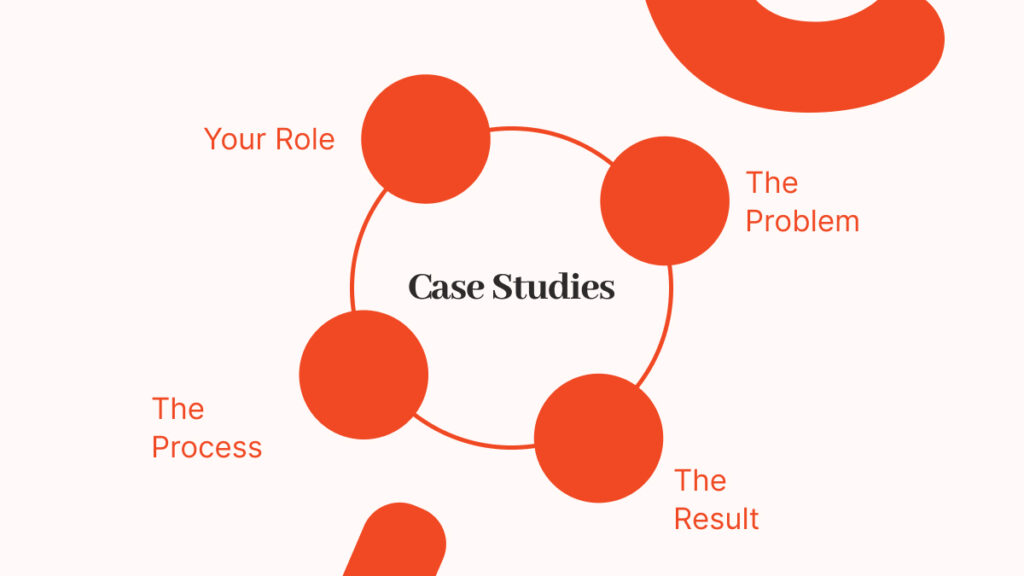
For each important project, consider using this simple structure:
The Problem
What challenge were you trying to solve?
Your Role
What were you personally responsible for?
The Process
How did you approach the work?
The Solution
What did you create?
The Result
What happened after the project was completed?
This structure is especially useful for people applying for remote jobs, because employers may want to understand how you think and work independently.
Your portfolio should show more than the final result.
It should demonstrate your process.
05. Show Your Skills Through Your Work
You can create a separate skills section, but your projects should also prove those skills.
For example, instead of only listing:
- Figma
- Photoshop
- Illustrator
- Webflow
Show projects where you used those tools.
Instead of simply writing:
Strong problem-solving skills
Explain how you solved a specific challenge.
Your work is stronger evidence than a list of claims.
06. Make Your Portfolio Easy to Navigate
A portfolio should be easy to explore.
Avoid making visitors click through multiple confusing pages just to understand your work.
A simple structure could include:
- Home
- About
- Work or Projects
- Case Studies
- Resume
- Contact
Keep navigation visible and straightforward.
Your most important work should be easy to access within one or two clicks.
Remember that recruiters may spend only a limited amount of time reviewing your portfolio.
Make that time count.
07. Include a Professional About Section
Your About page does not need to be a long autobiography.
Keep it focused on your professional identity.
You can include:
- Your role
- Your experience
- Your specialization
- Industries you have worked with
- Relevant skills
- Your approach to work
For example:
I am a visual designer specializing in branding and digital experiences. I work with businesses and teams to create clear, memorable, and user-focused design systems.
This gives visitors context without overwhelming them.
08. Make Your Contact Information Easy to Find
If someone likes your work, they should know exactly how to contact you.
Include:
- Professional email address
- LinkedIn profile
- Relevant professional platforms
- Resume link
- Contact form
Do not hide your contact information at the bottom of a complicated website.
Make it visible.
A simple
“Let's Work Together”
or
“Get in Touch”
CTA can be enough.
09. Optimize Your Portfolio for Remote Job Applications
When applying for remote work from home jobs, your portfolio link may be reviewed by someone in another country or time zone.
That means your portfolio should work without requiring additional explanation from you.
Before applying, check:
- Do all links work?
- Are images loading correctly?
- Does the site work on mobile?
- Is your contact information correct?
- Is your resume updated?
- Are your best projects easy to find?
- Are there spelling or grammar mistakes?
- Does the website load quickly?
A broken portfolio link can create a poor first impression before a recruiter even sees your work.
10. Don't Forget Your Resume and LinkedIn
Your portfolio should work alongside your other professional assets.
Your:
Resume → shows your experience
Portfolio → shows your work
LinkedIn → shows your professional presence
Make sure these platforms are consistent.
For example, your job title and professional identity should not be completely different across each platform.
If your portfolio says you are a UX/UI designer but your LinkedIn profile says you are only a graphic designer, recruiters may become confused about your career direction.
11. Keep Improving Your Portfolio
Your portfolio is not something you create once and forget.
Update it as your skills improve.
Remove older work that no longer represents your abilities and replace it with stronger projects.
A good habit is to review your portfolio every few months and ask:
- Does this still represent my best work?
- Is this the type of work I want more of?
- Have I learned something new?
- Are there projects I should remove?
- Are my links and information still accurate?
Your portfolio should grow with your career.
12. Where Should You Host Your Portfolio?
There are several ways to publish your work online.
Depending on your profession, you might use:
- A personal website
- A portfolio platform
- A professional community
- A code repository
- A case-study platform
Designers may use platforms that allow them to showcase visual work and case studies, while developers may use GitHub alongside a personal website.
Writers may create a personal website or professional profile containing published work.
The best option depends on your industry, but the most important thing is having one easy-to-share link.
Final Thoughts
A strong online portfolio can make a major difference when applying for remote work jobs.
Your resume can tell employers about your experience, but your portfolio gives them the opportunity to see your work and understand how you think.
You do not need dozens of projects or an expensive website to get started.
Choose your strongest work. Make your professional role clear. Explain your process. Keep navigation simple. Make contact information easy to find.
Most importantly, build a portfolio around the type of opportunities you want.
If you're preparing for
remote work jobs
, make sure your portfolio is ready before the right opportunity appears.
Because when a recruiter clicks your link, your work should already be speaking for you.

About the Author
Abdul Rehman — Co-Founder & Technical Director, Coding Professors
Abdul Rehman is a web designer and engineer with 3+ years of experience in high-end web design and development. As Co-Founder of Coding Professors, he focuses on making technology careers more accessible through practical guidance, mentorship, and industry-focused resources.