

How to Hire Remote Developers in 2026: A Complete Guide for Employers
Last Updated • 7 September 2026
Hiring skilled developers is no longer limited by geography. In 2026, companies can build strong technology teams by hiring remote developers from different cities, countries, and time zones. But finding the right developer requires more than simply posting a vacancy and waiting for applications.
Employers need the right job board, a clear job description, an efficient screening process, and a reliable way to reach qualified technical talent.
This guide explains
how to hire remote developers, where to find them, and what employers should consider when building a remote development team.
Why Companies Are Hiring Remote Developers
Remote hiring has become an important strategy for companies looking to expand their technical teams. Instead of limiting recruitment to candidates who live near an office, businesses can search for developers based on their skills, experience, communication abilities, and availability.
For startups and growing companies, this can make it easier to find specialized talent that may not be available locally.
Companies may hire remote developers for roles such as:
- Front-end development
- Back-end development
- Full-stack development
- Mobile app development
- Software engineering
- DevOps
- Cloud engineering
- Data engineering
- Artificial intelligence
- Machine learning
- WordPress development
The goal isn't simply to find someone who can code. The right candidate should also understand the company's requirements and be able to collaborate effectively in a remote environment.
How to Hire Remote Developers
A successful remote developer hiring process starts with defining exactly what your company needs.
01. Define the Role Before Posting
Before creating a job listing, identify the technical skills and experience required for the position.
For example, if you're hiring a full-stack developer, your requirements might include JavaScript, React, Node.js, APIs, databases, and Git.
Also determine:
- Seniority level
- Employment type
- Expected working hours
- Time-zone requirements
- Salary or compensation range
- Required technical skills
- Preferred experience
- Communication expectations
A detailed job specification helps attract candidates who actually match the position.
02. Write a Clear Developer Job Description
A strong developer job description should tell candidates what they will actually do.
Avoid filling the listing with unnecessary technical terminology. Explain the responsibilities, technology stack, expectations, and benefits clearly.
A good remote developer job description should generally include:
Job title: Use a specific title such as "Senior React Developer" instead of simply "Developer."
Responsibilities: Explain the work the developer will perform.
Technical requirements: List the essential programming languages, frameworks, tools, and platforms.
Experience: Clearly state the required level of professional experience.
Remote requirements: Mention whether the role is fully remote, partially remote, or restricted to specific locations.
Compensation: If possible, provide a salary or compensation range.
The clearer your job posting is, the easier it becomes for qualified candidates to decide whether the opportunity is right for them.
Where to Find Remote Developers
One of the biggest challenges for employers is knowing where to find remote developers.
Traditional job boards can provide a large number of applications, but employers may have difficulty identifying candidates with the technical skills they need.
A specialized developer job board can make the search more relevant by connecting companies with people actively looking for technology-related opportunities.
Employers can use platforms such as
CodingProfessors to post technology and remote job opportunities and reach candidates interested in software development, programming, design, and other digital roles.
Use a Technology-Focused Job Board
When your goal is to hire developers, reaching the right audience matters.
A general job board may expose your vacancy to thousands of people, but many applicants may not have the technical background required for the position.
A technology-focused platform gives employers a more targeted environment for recruiting.
For companies looking to hire tech talent, this can make the recruitment process more focused and potentially reduce the time spent reviewing irrelevant applications.
When choosing a job board for employers, consider:
- Audience quality
- Technology and developer categories
- Job visibility
- Candidate reach
- Ease of posting
- Cost
- Employer tools
- Remote job support
How to Find Qualified Remote Developers
Finding applicants is only one part of recruitment. The bigger challenge is identifying qualified candidates.
Start by reviewing the candidate's professional experience and portfolio.
For developers, practical work can often provide valuable insight into their abilities. Depending on the role, employers may review:
- GitHub repositories
- Personal websites
- Technical portfolios
- Previous projects
- Open-source contributions
- Programming experience
- Professional certifications
A candidate doesn't necessarily need to have every skill listed in the job description. Look for evidence that they can solve problems, learn new technologies, and contribute to a team.
Evaluate Technical Skills
Technical interviews and assessments can help employers understand a candidate's capabilities.
Depending on the role, you might evaluate:
- Programming fundamentals
- Problem-solving
- Code quality
- Debugging
- System design
- Database knowledge
- API development
- Framework knowledge
- Testing practices
Avoid making the assessment unnecessarily complicated. A practical task related to the actual job can often provide more useful information than a long theoretical test.
Don't Ignore Communication Skills
Technical ability is important, but remote developers also need strong communication skills.
A remote employee may need to communicate through:
- Slack or similar messaging platforms
- Video meetings
- Project management tools
- Documentation
- Code reviews
When hiring remotely, look for candidates who can explain technical concepts clearly, communicate progress, ask questions when necessary, and work independently.
Consider Time Zones Carefully
Remote hiring gives companies access to global talent, but time-zone differences can create challenges.
Before hiring an international developer, determine how much real-time collaboration the role requires.
For example, a company may allow employees to work flexible hours but require two or three hours of overlapping working time for meetings and collaboration.
Clearly communicate these expectations in the job posting.
Build a Strong Remote Development Team
Hiring one developer is different from building a complete remote development team.
As your company grows, you may need developers with different specialties.
A remote team might include:
- Front-end developers
- Back-end developers
- Full-stack developers
- QA engineers
- DevOps engineers
- UI/UX designers
- Product managers
- Engineering leads
Instead of hiring everyone at once, consider the skills your product requires and build the team gradually.
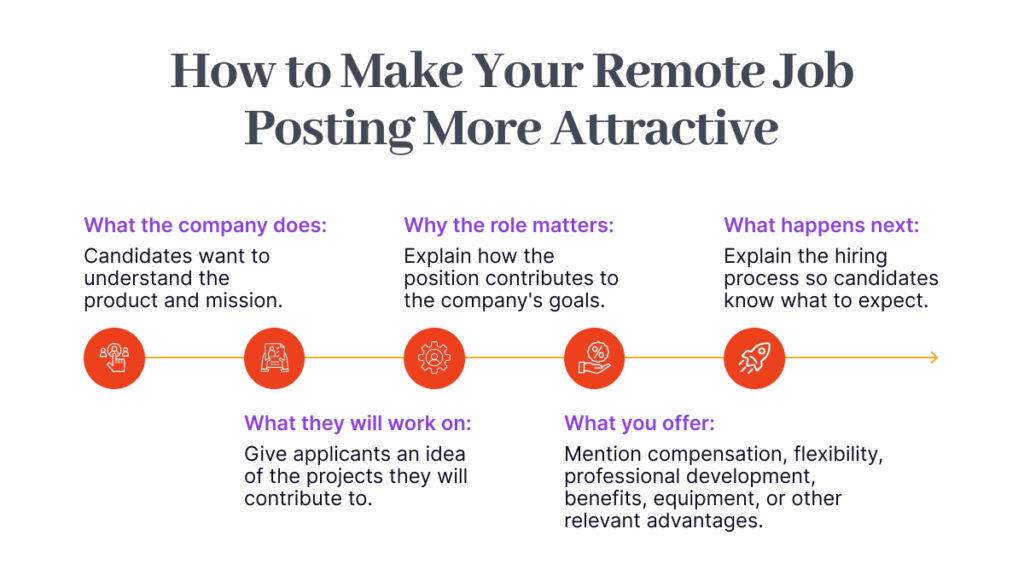
How to Make Your Remote Job Posting More Attractive
Competition for experienced developers can be high. A generic job posting may struggle to attract strong candidates.
Make your listing more compelling by explaining:
What the company does: Candidates want to understand the product and mission.
What they will work on: Give applicants an idea of the projects they will contribute to.
Why the role matters: Explain how the position contributes to the company's goals.
What you offer: Mention compensation, flexibility, professional development, benefits, equipment, or other relevant advantages.
What happens next: Explain the hiring process so candidates know what to expect.
Common Mistakes Employers Make When Hiring Developers
Several mistakes can make remote recruitment unnecessarily difficult.
Posting vague job descriptions
"Looking for a talented developer" doesn't tell candidates enough about the role.
Listing too many requirements
A long list of technologies can discourage capable developers who could learn some of the preferred skills quickly.
Ignoring portfolios
For many development roles, previous projects can provide useful evidence of practical experience.
Making the hiring process too long
Strong developers may accept another offer while waiting for a slow recruitment process.
Not explaining remote expectations
Candidates should know whether the position is fully remote, what time zones are accepted, and whether specific working hours are required.
Why Employers Should Use CodingProfessors
For companies looking to
post remote jobs
and reach technology-focused candidates, CodingProfessors provides an opportunity to put developer and technology vacancies in front of a relevant audience.
Whether you're a startup hiring your first developer or an established company expanding an engineering team, publishing a clear job listing is the first step toward reaching potential candidates.
Employers can use CodingProfessors to post developer jobs, promote remote opportunities, and connect their vacancies with professionals searching for technology careers.
Final Thoughts
Learning how to hire remote developers is increasingly important for companies building modern technology teams.
The best approach isn't simply to post a vacancy and wait. Define the role, write a clear job description, choose a relevant remote hiring platform, evaluate technical and communication skills, and create a hiring process that respects candidates' time.
For employers ready to reach developers and technology professionals, a specialized developer job board can be an effective starting point.
Ready to hire your next developer? Post your job on CodingProfessors and reach professionals looking for their next technology opportunity.
Frequently Asked Questions
What is the best way to hire remote developers?
Start by defining the technical requirements, creating a detailed job description, and publishing the position on a relevant developer or technology job board. Use technical assessments, portfolio reviews, and interviews to evaluate candidates.
Where can I find remote developers?
Employers can find remote developers through technology-focused job boards, professional networks, developer communities, recruitment platforms, and specialized remote hiring websites.
How do I post a remote developer job?
Create a detailed listing explaining the role, responsibilities, technical requirements, compensation, remote-work expectations, and application process. You can then publish the vacancy on a remote developer job board such as CodingProfessors.
What should I look for when hiring a remote developer?
Look beyond programming skills. Consider technical experience, previous projects, problem-solving ability, communication skills, reliability, and the candidate's ability to work independently.
Are remote developers suitable for startups?
Yes. Remote developers can give startups access to a larger talent pool and allow them to recruit based on skills rather than geographical location. Startups should establish clear communication, project management, and collaboration processes from the beginning.

About the Author
Abdul Rehman — Co-Founder & Technical Director, Coding Professors
Abdul Rehman is a web designer and engineer with 3+ years of experience in high-end web design and development. As Co-Founder of Coding Professors, he focuses on making technology careers more accessible through practical guidance, mentorship, and industry-focused resources.